Posts

Sea-Based Drones & the Future of Counterterrorism
Image
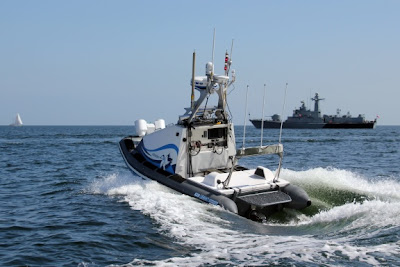
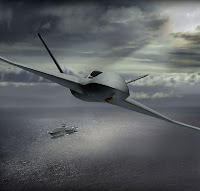
In a recent Washington Post editorial , Kimberly and Frederick Kagan take a solid position on why the U.S. should maintain a troop presence to support counterterrorism operations in Afghanistan post-2014. The bulk of their argument for continued U.S. ground deployments revolves around the tyranny of distance’s impact on future counterterrorism (CT) operations against the al Qaeda (AQ) network: North Waziristan is more than 600 miles from the nearest coastline; the other sanctuaries are farther. The U.S. Air Force reports that armed Predator drones have a range of about 1,150 miles - not enough to get to Waziristan and back again from the coast, much less to orbit and observe a target. Special mission units would have to parachute from transport aircraft because no helicopter in the U.S. inventory can fly that far. But they could not return because aircraft cannot land in the mountains of Eastern Afghanistan or in Pakistan. Manned aircraft can drop precision weapons on targets in...
Navy Looks to Small Business to Solve RMS Problems‏

Image
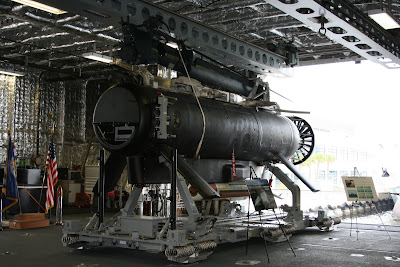
Lockheed Martin's troubled  AN/WLD-1 Remote Minehunting System is the key component of the U.S. Navy's Littoral Combat Ship Mine Counter-measures Mission Package (MCM MP) and   has been under development for nearly two decades.   The heart of the system is a diesel-powered, semi-submersible Remote Multi-Mission Vehicle (RMMV)  designed to tow a variable depth mine-hunting sonar.  AN/WLD-1 aboard USS Freedom (LCS-2) Testing on RMS prototypes began in 1994, but the system has yet to mature to full operational status.  In an effort to work some of the kinks out of RMS, the Navy's Program Executive Officer for Littoral Combat Ships (PEO LCS)  has sought the assistance of industry via the most recent Small Business Innovation Research ( SBIR ) program solicitation.     A solicitation released by the Remote Minehunting System Program Office (PMS 403) entitled " Anticorrosion Solution for Re...

A Little Friday Humor

Image
U.S. Navy Blue Angels Demonstration Team, Circa 2020. H/T: MJ

DIY Naval Drones: Floating Quadcopter

Image
Multi-rotors have been well-received by hobbyists and even garnered some interest from the U.S. Navy.  But up until now, these lightweight UAVs haven't mixed very well with water.  The guys at Aquacopters have changed this with a water-proofed and ruggedized simple quad-frame.  The ability to capture video above, on, and under the surface of the water with a single small drone creates an interesting range of options for hobby, scientific, commercial, or military use.

Poland's Naval Unmanned Systems Developments

Image
Although the Polish Navy operates a range of remotely operated vehicles today, there is no yet publicly known autonomous vehicle in operation.   The situation is quickly changing, though.  Three AUV systems planned for mine-hunting use on future patrol ships were mentioned in the Navy's last modernization plan. Additionally, General Skrzypczak, responsible for modernization programs in the Ministry of Defense, recently discussed MoD interest in Unmanned Surface Vessels for port protection and surveillance. These craft are expected to have some limited offensive capability. Not surprisingly, during a visit at this year's Euronaval convention, the Israeli company Rafael introduced the Polish delegation to its latest up-armed version of Protector .  Later it was reported that after the exhibition, an agreement for potential technology transfer between companies (not mentioned by name) was signed. It is an impo...

The Next Wave - Swarming Underwater Drones

Image
Experimentation with large numbers of low cost quadrotors operating in swarms has produced some interesting results, including potential for future military applications.  Now some researchers in Germany are working to transition these concepts to the underwater realm, building autonomous underwater vehicles (AUVs) that behave like fish in a school.  A team at the University of Luebeck's Institute of Computer Engineering has developed an affordable AUV designed for environmental surveys called MONitoring System and Underwater Navigation Robot (MONSUN ) II. MONSUN II is a 4 kilogram AUV equipped with a series of vertical and horizontal thrusters to maneuver and maintain orientation.  The vehicle maintains its position relative to other AUVs in the school using infrared sensors and a nose camera with a form of computer image recognition called "blob detection."  The swarming technology demonstrat...

U.S. CNO Makes Unmanned Systems a Priority

Image
PALMDALE, Calif. (Aug. 8, 2012) Chief of Naval Operations (CNO) Adm. Jonathan Greenert observes a fly-by demonstration of a Predator C Avenger unmanned aerial vehicle. (U.S. Navy photo by Mass Communication Specialist 1st Class Peter D. Lawlor/Released) In a nod to maritime tradition, the new Chief of Naval Operations set forth a " Navigation Plan " with budgetary priorities and a route to achieve the vision he set in the " Sailing Directions " for 2013-2017.  Admiral Greenert's prioritization of unmanned systems for the U.S. fleet in these documents is anything but archaic.  Seven of the CNO's 34 budget focus areas directly address unmanned systems, including: "Increase near-term mine warfare capability with Quickstrike mines; the Seafox Mine Neutralization System ; upgraded MCM-1 class ship sonar, hull, and engineering upgrades; and Unmanned Underwater Vehicles (UUV) for shallow and bottom mine detection. Improve near-term cap...