Posts

Showing posts with the label CUSV

Unmanned-Centric Force Structure
Image
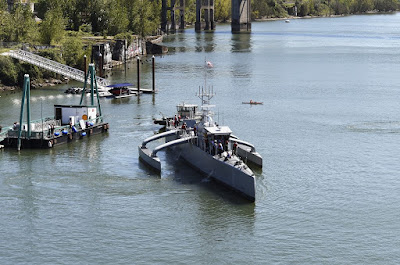
By Javier Gonzalez  The U.S. Navy is currently working on a new Fleet Structure Assessment, the results of which will eventually help inform the long-term force structure goals of the Navy’s 30-year shipbuilding plan. This ongoing analysis was generated due to the realization that some of the assumptions used to develop the current goal of 308 ships have changed significantly since its proposal in 2014. The Russian resurgence and China’s rapid military buildup defied expectations, and a review of the Navy’s force structure was absolutely warranted. The conundrum and implied assumption, with this or similar future force structure analyses, is that the Navy must have at least a vague understanding of an uncertain future. However, there is a better way to build a superior and more capable fleet—by continuing to build manned ships based on current and available capabilities while also fully embracing optionality (aka flexibility and adaptability) in unmanned systems. Additiona...

Multi-Domain Unmanned Systems Implementation Creates Comprehensive Maritime Situational Awareness

Image
by Morgan Stritzinger, Public Relations Specialist, Textron Systems, mstritzi(at)textronsystems.com The collaboration of unmanned aircraft systems (UAS), unmanned surface vehicles (USVs) and unmanned underwater vehicles (UUV) extends relative reach, and therefore the operational footprint. The unmanned aircraft and USV work together to extend data link ranges, and the USV can carry, deploy and recover the UUV, thereby extending its range and providing a safer environment for the host vessel. Extending mission capabilities is critical to efficient and effective maritime missions, creating situational awareness that delivers actionable data and value. Unmanned systems are best suited for tasks too “dull, dirty or dangerous” for their manned counterparts and are a pertinent complementary system to manned asset efforts. This includes repetitive tasks that are more costly for humans to perform or represent opportunity for human error, situations in extreme weather and environmental co...

The Navy's Swarming Robot Boats: Sorting Through the Hype

Image
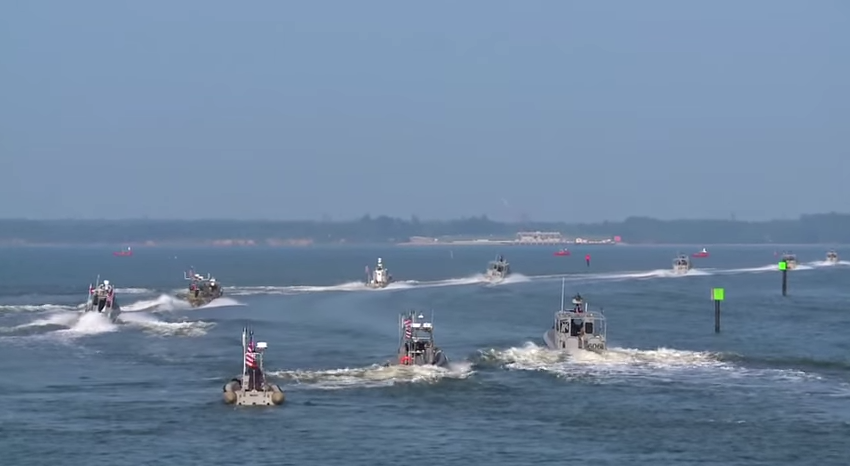
By now, most readers are familiar with the U.S. Navy's new swarming drone experiment using the  CARACaS (Control Architecture for Robotic Agent Command and Sensing)   system for automating small surface craft. The hype surrounding this development is significant, and some of it is rightfully deserved. Automated boats will find a place in future naval operations, but their capabilities and limitations must be more fully understood before that happens.  August 2014 - A swarm of CARACaS equipped patrol boats on the James River - U.S. Navy image. Capabilities The primary b enefits of autonomous unmanned vessels are longer endurance than manned patrol boats, and of course, a reduction in risk to human sailors.  Naval budgeteers consistently lament the cost of personnel, so o stensibly, automated boats will be less expensive than training and maintaining human crews.  On the other hand, the Navy's force protection boat crews, most of them resident in the...

Tactical Employment of Drone Motherships

Image
As  discussed in an earlier post , dynamics between unmanned naval systems and the platforms that carry them are changing rapidly to accomodate new technologies and tactics.  Arguably, various types of drone motherships have the potential to transform mine countermeasures more than any other warfare area and the evolution in mine-countermeasures tactics towards the mothership-unmanned underwater vehicle (UUV) partnership is already underway.  One of the first major demonstrations of this concept occurred last summer during 5th Fleet's International Mine Countermeasures Exercise ( IMCMEX ) when a number of UUVs were tested from large amphibious motherships including USS Ponce ((AFSB(I)-15). Essentially, the Navy is moving from dedicated MCM ships such as the Avenger class minesweeper, to a trio of platforms: a Generation I mothership, carrying Generation II platforms (a RHIB specially modified to carry UUVs; seen b...

The Evolution of Drone Motherships - Part I

Image
As long as physical limitations constrain the range and endurance of unmanned air, surface, and sub-surface vehicles, they will need to operate in conjunction with larger platforms.  These motherships serve a wide variety of functions besides simply transporting, launching, and recovering unmanned vehicles.  They maintain and repair the drones, recharge or refuel their propulsion sytems, and they enable data collected from unmanned sensors to be downloaded, analyzed, and disseminated beyond the line-of-sight.  Characterizing the evolution of these unmanned vehicle motherships can help extrapolate how they might be used in the future. Generation I - Ad hoc platforms: This category includes legacy naval vessels ranging in size from patrol craft (US SOCOM's MK V at right, with ScanEagle) to large amphibious ships, and likely some day, aircraft carriers.  Minesweeping and hunting vessels have carried remotely opera...