Posts

Showing posts with the label Sea Avenger

UAVs Compete for Dominance in the Arctic

Image
The Arctic Circle is a complex environment of harsh climate, shifting ice flows, and remote, barren wastelands. Much ado has been made of late of the region's potential for alternative shipping routes, resource extraction, and of course, the expanded military presence usually associated with those activities. The vast distances and unforgiving temperatures of Arctic air and waters make unmanned aerial vehicles ideal for military reconnaissance there. Practically all of the countries which border Arctic seas have some sort of UAV programs underway. One of the primary goals of Canada's troubled  Joint Uninhabited Surveillance and Target Acquisition System (JUSTAS) project was to conduct Northern Patrols over the country's Arctic territory. In addition to surveilling the area, the yet to be determined type of JUSTAS UAVs will be required to drop search and rescue kits to distressed mariners.  The program's delays have been largely due to competing requirements bet...

Unmanned ISR and Future Air Wing Composition

Image
According to Defense News , the U.S. Navy's inventory of manned intelligence, surveillance, and reconaissance (ISR) platforms - land-based P-3 Orion and EP-3 Aries - will be cut by more than a quarter over the next few years.  The current consolidations are not the first time in recent history the Navy has trimmed ISR capability.  As late as  the 1990s, a typical carrier air wing deployed with a number of organic platforms capable of collecting intelligence, including tactical aircraft such as the F-14 with the Tactical Airborne Reconnaissance Pod System (TARPS) and ES-3A Shadows for electronic signals intercept (ELINT).  These aircraft were supplemented by a robust ground-based P-3 fleet along with numerous FLIR and radar capable helicopters on smaller cruisers and destroyers. Today's remaining manned aircraft, such as the venerable, but still effective, P-3s are today often found flying over-la...

Sea-Based Drones & the Future of Counterterrorism

Image
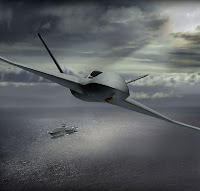
In a recent Washington Post editorial , Kimberly and Frederick Kagan take a solid position on why the U.S. should maintain a troop presence to support counterterrorism operations in Afghanistan post-2014. The bulk of their argument for continued U.S. ground deployments revolves around the tyranny of distance’s impact on future counterterrorism (CT) operations against the al Qaeda (AQ) network: North Waziristan is more than 600 miles from the nearest coastline; the other sanctuaries are farther. The U.S. Air Force reports that armed Predator drones have a range of about 1,150 miles - not enough to get to Waziristan and back again from the coast, much less to orbit and observe a target. Special mission units would have to parachute from transport aircraft because no helicopter in the U.S. inventory can fly that far. But they could not return because aircraft cannot land in the mountains of Eastern Afghanistan or in Pakistan. Manned aircraft can drop precision weapons on targets in...