ASW Drones - An Update
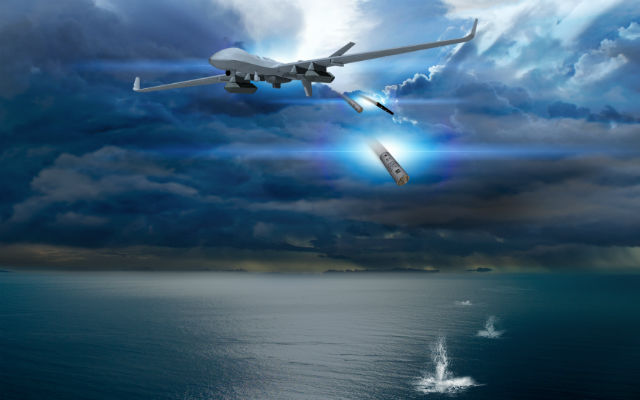
One of the areas of naval warfare with the most potential for transformation by unmanned systems is submarine hunting. In general, anti-submarine warfare (or ASW) requires persistently deployed sensors at various water depths in order to detect, track, and identify submarines so that a targeting solution can be developed and weapons deployed against the subs. This detect-to-engage sequence can take weeks to develop or it can occur very rapidly. Additionally, ASW is a multi-domain discipline, meaning assets are deployed above, on the surface of, and under the sea. Currently, ASW sensors are deployed by aircraft (usually periscope detecting radars, magnetic anomaly detectors , and sonobuoys) and surface ships (hull mounted, towed array, or variable depth sonars). As one can imagine, coordinating these assets is a very complicated activity. At some point in the future, increased levels of autonomy in unmanned systems will reduce to a degree the human coordination requ...
